
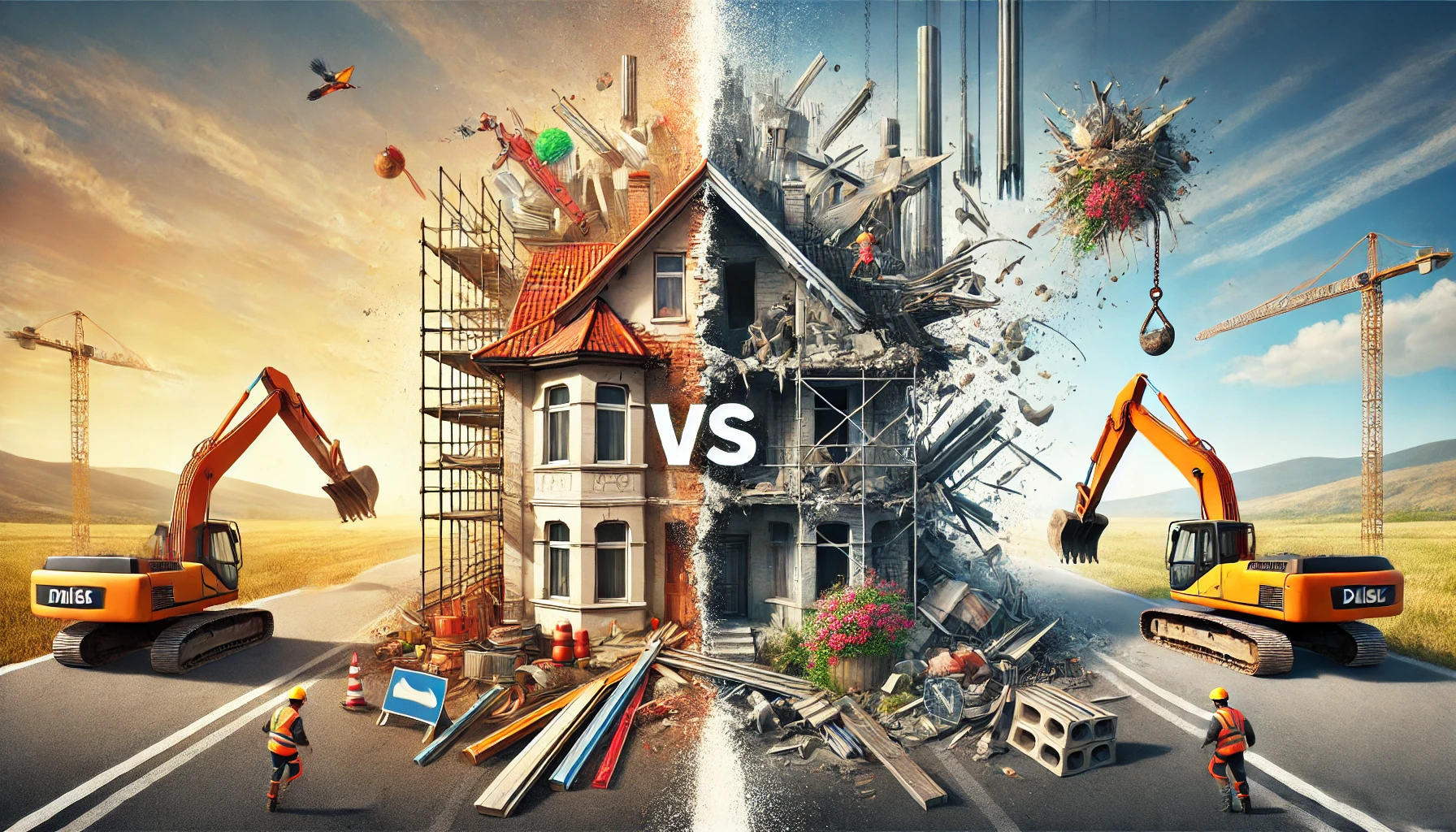
Building and demolition permits are two essential documents in construction, with different purposes and separate application processes.
This article explores the differences between them, when and how to apply, and the main requirements for each.
What is a building permit?
A building permit is a document issued by local authorities allowing a new building to be constructed or an existing building to be altered. It is issued on the basis of technical documentation demonstrating compliance with legal, planning and safety requirements.
When is a building permit required?
- Constructing a new building.
- Extending an existing building.
- Changing the use of a building (e.g. converting commercial space into a home).
- Carrying out modernisation, strengthening or refurbishment works.
Documents required to obtain a building permit:
- Planning certificate.
- Technical documentation for the building permit (D.T.A.C.).
- Approvals and consents required by the planning certificate.
- Proof of land ownership.
- Proof of payment of the permit fee.
What is a demolition permit?
A demolition permit legally allows the full or partial removal of an existing building. Its purpose is to ensure that demolition complies with safety and environmental protection requirements, helping prevent potential risks or damage.
When is a demolition permit required?
- Demolishing a building to make way for a new one.
- Removing structures that pose a risk to public safety.
- Removing domestic outbuildings that are no longer used.
Documents required to obtain a demolition permit:
- Planning certificate.
- Technical design for demolition, prepared by authorised specialists.
- Approvals and consents (e.g. ISU approval, environmental approval).
- Proof of ownership of the land and building.
- Proof of payment of the permit fee.
The main differences
| Aspect | Building permit | Demolition permit |
|---|---|---|
| Purpose | Building or modifying a building. | Full or partial removal of a building. |
| Technical documentation | Construction design (D.T.A.C.). | Demolition design. |
| Specific approvals | Utility and fire safety approvals. | ISU approval, environmental approval and other approvals necessary for demolition. |
| Validity period | Valid until work begins (maximum 12 months). | Generally valid for 12 months. |
| Subsequent obligations | Starting construction within the specified timeframe. | Environmental remediation and clearing the site after demolition. |
How do you choose between the two?
In some cases, both permits can be requested at the same time, for example when removing an existing building to make way for a new one. However, if demolition is not immediately followed by construction, a separate demolition permit must be requested.
What happens if you do not obtain the required permit?
Carrying out works without the required building or demolition permit constitutes an offence and may result in:
- Substantial fines under the applicable legislation.
- Suspension of work and an obligation to restore the original conditions.
- Loss of the right to request a permit for the same works in future.
Conclusion
Building and demolition permits are essential for carrying out work legally and safely. Work with authorised professionals who can help prepare the documentation and guide you through the administrative process. Following these steps supports the success of the project and helps avoid legal complications.